Surgeons bring unique advantages to flexible endoscopy: faster learning curves, intra-operative rescue, and the ability to offer scarless surgery. Summary of a JMAS article by Easwaramoorthy Sundaram, Krishna Rau Bhimanakunte
Flexible endoscopy is no longer just a diagnostic tool — it is a powerful therapeutic platform that every modern surgeon should master. In their personal-view article in the Journal of Minimal Access Surgery, Dr. Easwaramoorthy Sundaram and Dr. Krishna Rau Bhimanakunte highlight why surgeons are uniquely positioned to continue performing flexible endoscopy and why this skill is essential for modern surgical practice.
Endoscopy has deep surgical roots. Many procedures that are now standard in gastroenterology — such as polypectomy, biliary stenting, and variceal banding — were pioneered or advanced by surgeons. With expanding patient volumes and increasing demand for minimally invasive care, surgeons play a crucial role in bridging access gaps, especially in large and developing healthcare ecosystems.
The authors note that surgeons often achieve competency in flexible endoscopy more quickly because of their existing skills in laparoscopy, anatomy, and tissue handling. This short learning curve makes endoscopy an efficient, high-value addition to surgical training. Preoperative endoscopy performed by the operating surgeon can also enhance surgical decision-making and improve intraoperative outcomes.
Flexible endoscopy additionally serves as an essential intraoperative and postoperative tool — whether to identify bleeding points, assess anastomotic integrity, manage leaks, or provide minimally invasive rescue when complications arise. Newer therapeutic endoscopy techniques such as POEM, endoscopic sleeve gastroplasty, and advanced stenting offer patients scarless solutions aligned with global minimally invasive trends.
The article concludes with a strong message: surgeons must remain deeply engaged with flexible endoscopy, supported by structured, accredited training programs. With rapidly advancing technology and growing patient expectations, endoscopy is not an optional skill — it is a core competency for the future surgeon.
Sundaram E, Bhimanakunte KR. 10 reasons why surgeons should continue performing flexible endoscopy. Journal of Minimal Access Surgery 2022;18:635–637. DOI: 10.4103/jmas.jmas_317_21.
The original article is published by Wolters Kluwer–Medknow under the Creative Commons Attribution-NonCommercial-ShareAlike 4.0 License.
If you’re inspired to strengthen your endoscopy skills and bring these advantages into your surgical practice, don’t miss the opportunity to train directly with leading experts.
Join IRCAD INDIA – January 4, 2026
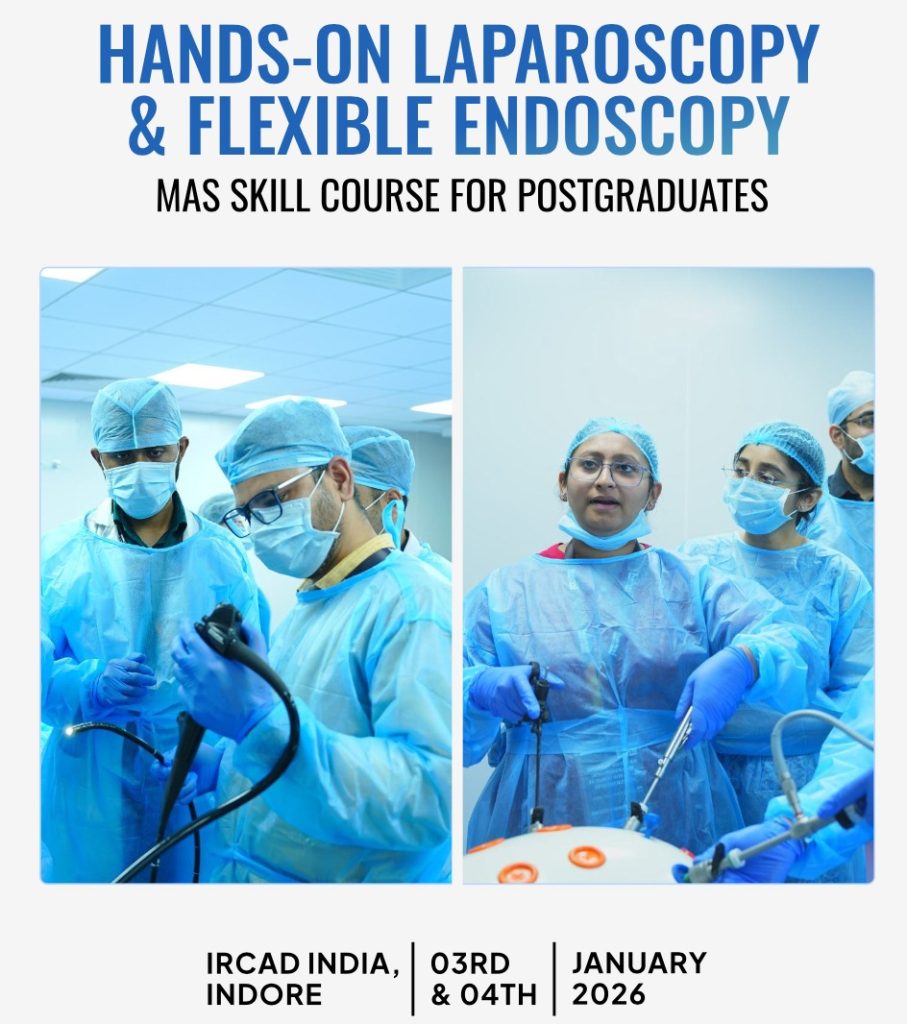
Hands-on Laparoscopy & Flexible Endoscopy Skill Course (MAS Skill Course for Postgraduates)
Course Directors:
Dr. S. Easwaramoorthy • Dr. Mohit Bhandari • Dr. Mahak Bhandari
Faculty:
Prof. Arvind Ghanghoria • Prof. Manoj Kela • Dr. M. Kanagavel •
Dr. Satyapriya DeSarkar • Dr. M. Senthil
January 3–4, 2026
Fee: ₹15,000 (including tax)
A focused, practical, skill-based program designed to help you master essential laparoscopic and flexible endoscopy techniques—exactly the competencies highlighted in the article above.